

US Cold Team Members, Partners, and Friends,
As we move into 2026, the company has turned an important page.
2025 was a year of relentless execution. Across the network, teams expanded facilities, integrated new systems, and pushed through an extraordinary amount of work to strengthen the foundation of the business. It was a year of sprinting. Many of the things we had been planning and building for several years finally moved into reality. I am incredibly proud of what our teams accomplished.
Now what excites me is what comes next. Because 2026 is the year we begin to fully execute. The facilities we expanded are now operating at scale. The systems we built are now running in production. The automation programs we launched are now becoming part of everyday operations. In many ways the sprinting phase is behind us. Now we run.
Across the industry the last couple of years have felt cautious. Many companies were waiting to see how the broader economy would unfold. As we move into 2026, I sense growing confidence across our customers and partners. For US Cold that creates real opportunity. We may see a measured start to the year, but I believe we are heading toward a very strong finish.
This moment also comes at a meaningful time for the country. In 2026 the United States will celebrate its 250th anniversary. For a company that helps move food across this nation every day, that milestone is a reminder of the infrastructure that keeps the country running. Our work is part of that system.
First, safety. In 2025 US Cold achieved the best safety performance in the company’s history. Every metric improved. Recordable injuries, days away incidents, DART performance and other measures all reached new benchmarks. It happened because thousands of people across our facilities made safety part of how they work every day. I want to recognize the leadership of Lisa Battino and her team, and as importantly the commitment of every team member who takes ownership of creating a safer workplace. We are off to a strong start in 2026, but safety is never finished. Our goal now is simple. Make 2026 the safest year in US Cold history.
Second is technology and execution. We are now approaching the end of our legacy warehouse systems and the full transition to Phenix: our Warehouse Execution System. This is a major milestone for the company. Phenix gives our operations teams faster and clearer visibility into the movement of product through our facilities. The work does not stop there. Additional teams are already building the next evolution of the platform. Key pieces are already running in production and the performance is impressive. The new architecture is enabling our developers to make modifications faster and safely. AI-assisted coding and QA has been a game changer, I’m glad our technology group adopted early. The result is that our technology organization is moving faster and delivering more to our facilities than ever before.
Third, I want to recognize our carrier community. Recently we won a new customer after a competitive RFP process. As part of their evaluation they had spoken directly with carriers that serve our facilities. The feedback was clear. US Cold stood out significantly in terms of carrier satisfaction. That recognition belongs to the people across our facilities who interact with drivers every single day. Turning trucks efficiently, running organized yards, and treating drivers with professionalism and respect all make a difference. From the general manager to the shipping office to the representative working the window, every interaction matters.
We are also investing in systems to support that experience including improvements to appointment scheduling, welcome center processes, yard management tools, and direct feedback systems. Our goal is simple. Make the carrier experience at US Cold the best in the business.
Looking ahead to 2026 there are several things I am particularly excited about. One is continuing to build on our safety performance. Another is the next generation of case picking technology now being deployed in several facilities. Early results are showing meaningful improvements in productivity and throughput, with additional upside ahead.
More broadly we are seeing the transformation we have been working toward begin to take shape. For several years we were building the foundation through facility expansions, automation programs, and modernization of our technology platforms. Now we are beginning to see the impact of that work across the network. We are moving from sprinting to running, and in many places the technology and automation in our buildings are beginning to move even faster.
The foundation is strong. The momentum is building. The opportunity ahead is real.
2026 is the year we execute on everything we built. I am excited to see what we accomplish together.
Larry Alderfer | President & CEO

Ready to Grow When You Are!
US Cold assets and services are perfect for partners growing in the Southeast.
What do real estate and refrigerated warehousing have in common? It’s location, location, location. Being in the right place—matters.
Then again, what ultimately distinguishes cold storage leaders is something more. Although location is important, what third-party logistics providers most need is the right mix of services and solutions for their food processor-shipper partners.
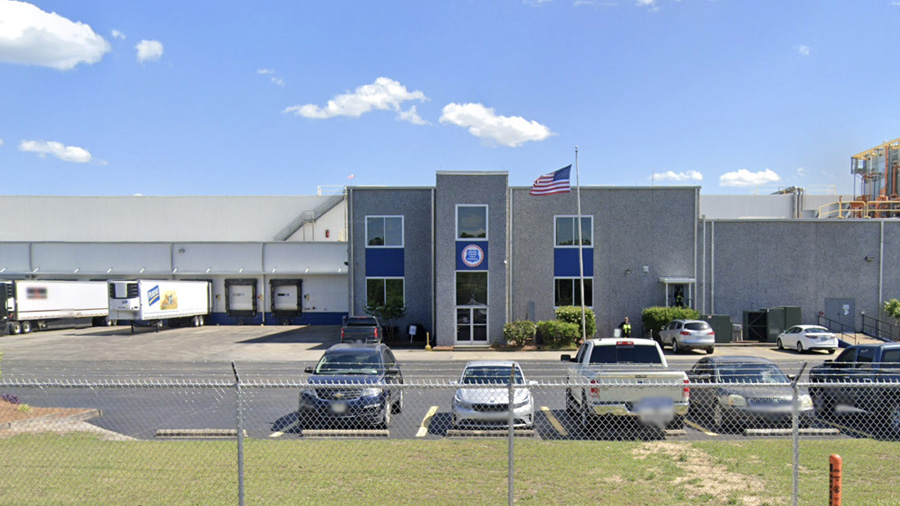
That easily describes US Cold’s Southeast region, which includes nine locations stretching from Omaha, NE, eastward to Georgia, Tennessee, North Carolina and Florida. Every day, these regional operations handle a wide range of refrigerated and frozen products—from dairy to deli meats and ice cream to entrees.
 Speaking of products, US Cold’s Southeast region operations—including those in Georgia, Tennessee and North Carolina—have earned annual “Warehouse of the Year” KPI performance awards from partners such as Mars, The Magnum Ice Cream Co. and Butterball.
In just the last few years, US Cold has invested millions in expansions, automation and new technologies throughout the region. These include a Phase 3 expansion with automation in Lake City, FL (completed 2024) as well as a state-of-the-art, Phase 3 cooler expansion in McDonough, GA (scheduled for 2027 completion).
“I’m proud we provide and maintain superior service levels at an affordable cost. That’s what allowed us to grow in these markets,” says David Carr, Senior Vice President, Business Development. “We continue to invest to accommodate a growing customer base and keep pace with overall regional trends and needs.”
Investing in Automation, Efficiency
US Cold puts its money where its mouth is. In a competitive, Atlanta-area market, it expects by May 2027 to complete a 14.8 million-cubic-foot refrigerated addition at its McDonough 1, GA, warehouse. The final build-out will include some of the industry’s latest storage and retrieval automation and bring the operation’s total footprint to more than 21 million cubic feet.
“This expansion isn’t just about adding cubic footage—it’s about future-proofing the business by increasing our capacity, efficiency, and competitiveness in such a fast-growing, temperature-sensitive market,” adds General Manager Dedric Thomas. “We want to provide current and future customers more opportunities for growth without compromising existing operations. Ultimately, it means we can better serve customers with more space, faster turnaround times and the ability to handle larger or more complex orders.”
 The expansion will include two new refrigerated, 35°F rooms. One 13.2 million-cubic-foot room will house an automated storage and retrieval system (ASRS) while a smaller room will house some of the industry’s most advanced automated layer pick equipment. The expansion also will include more than 41,000 additional pallet positions, 26 more dock doors and two additional rail dock doors.
Interestingly enough, US Cold also chose the Southeast for its first multifarious automated expansion, a 5.5-million-cubic-foot frozen addition completed in 2024 in Lake City, FL. Officials selected the site as critical for the company’s ability to service the state’s overall growing population as well as Publix Super Markets’ key distribution centers in Tampa and Orlando.
In both instances, US Cold is keeping a check on critical labor costs in competitive markets. It likewise enhances its abilities to provide COLDshare Consolidation less-than-truckload distribution services. These efforts lower costs for processor-shippers and more efficiently service end-receivers. Every year, US Cold builds more than 80,000 consolidated LTL shipments and moves more than 2 billion pounds in the process. It uses the latest technologies like AI-assisted load-planning and a state-of-the-art TMS.
For the record, its McDonough and Lake City operations also are served by rail.
Welcome to Tennessee!
You could say that US Cold also puts its money where consumer’s mouth is—in Tennessee. Axios Media Nashville reported that Tennessee’s population had grown by 7.3 million people in July 2025, a year-over-year increase of 0.9% according to Census estimates. Interestingly, that population growth exceeded the national annual figure of 0.5%. Axios also noted that Tennessee ranks in the top 10 states based on raw population and rate of growth.
US Cold sites in La Vergne and Smyrna, TN, collectively manage about 8.2 million cubic feet of refrigerated and frozen space (-05ºF to +38ºF) with approximately 32,000 racked pallet positions. These sister sites are close to Nashville and Knoxville and also are strategically suited to serve Washington, DC; Richmond, VA; Raleigh, NC; and Birmingham, AL.
It’s a Blast!
Just as different markets have different needs, US Cold’s Southeast Region also serves the nation’s leading meat protein processors. Operations in Lumberton and Warsaw, NC, as well as Omaha, NE, collectively manage nearly 20 million cubic feet of space. These operations offer -20ºF to +45ºF storage (varies by location) and all three provide the latest in quick freeze module blast freezing, import-export services and global BRCGS Certifications.
US Cold Lumberton, in particular, boasts one of company’s largest blast-freezing operations. With 60% of inbound loads coming from local processing plants, it handles an immense volume of export shipments and sends products worldwide.
Warm Welcome for Cold Carriers
US Cold creates enhanced “Welcome Center” experience for carrier partners.
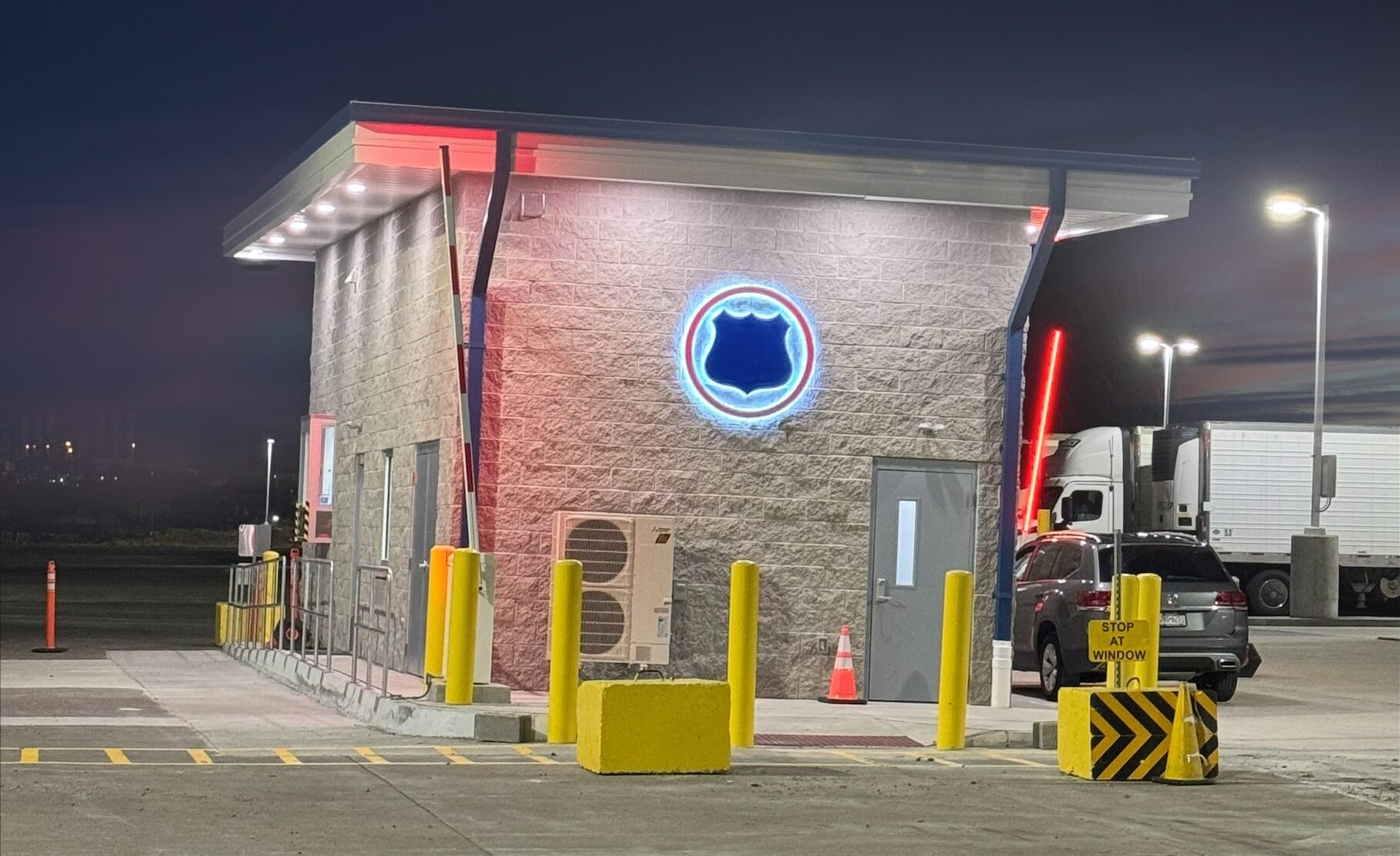
Sure, it may be called refrigerated “warehousing,” but first impressions matter before products even enter the warehouse. That’s why US Cold is proactively welcoming and engaging carrier partners well before their shipments are unloaded.
Interestingly enough, it was back in 2022 when US Cold created its first carrier Welcome Center in Lebanon, IN. Today finds US Cold is extending the concept to other sites nationwide and increasing its use of Vector, a complementary digitized driver information platform.
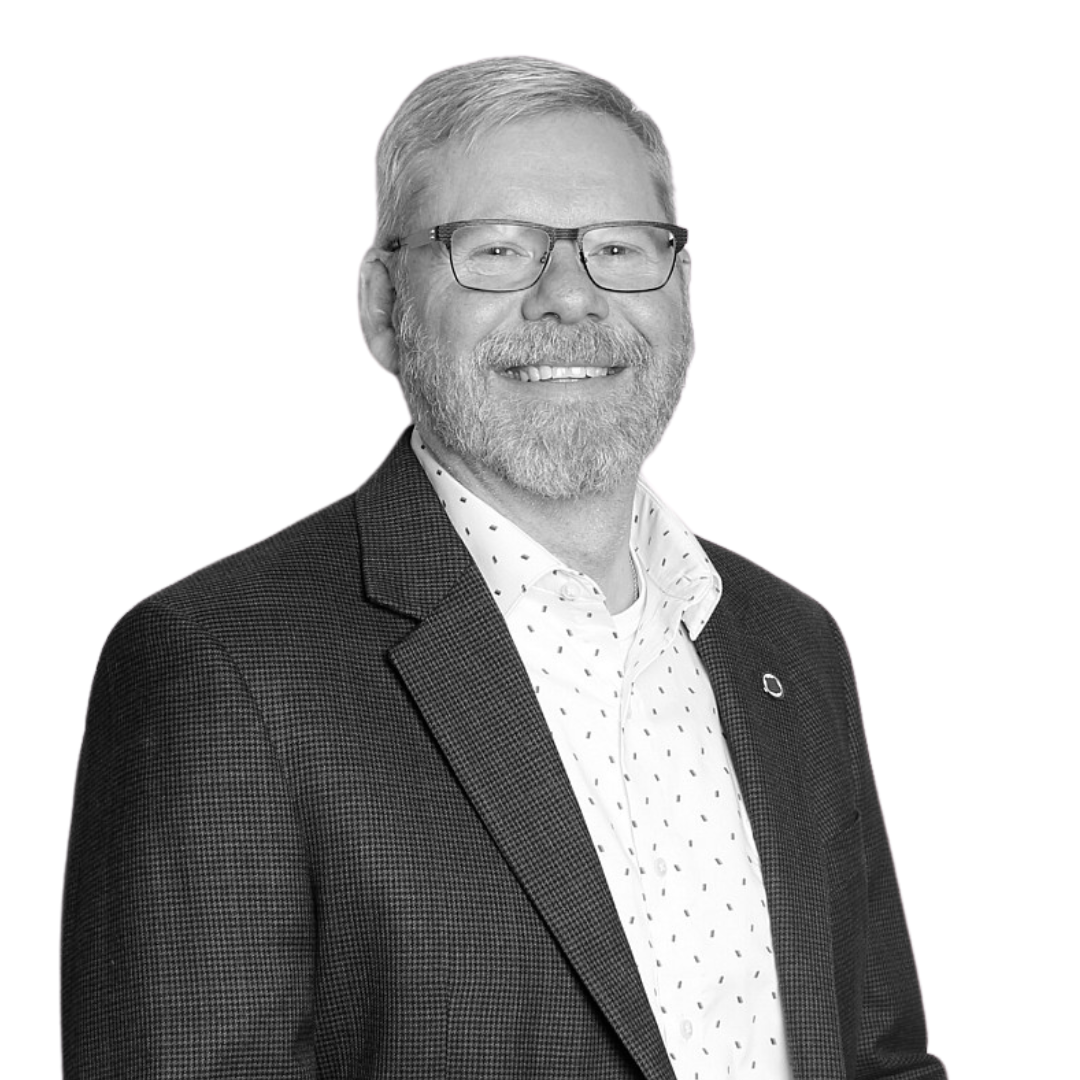 Adam Ashley, Area Director, Midwest, has led the Welcome Center program.
“Coming out of COVID, our Lebanon team saw an opportunity to better service drivers at a Welcome Center,” says Ashley. “It saved drivers the hassle of parking, going to the office, getting door assignments, walking back to truck, moving to the door, going back to office, getting paperwork, heading back to truck, and then checking out at the guard house.
“With this shift, drivers have just one point of contact to complete the entire arrival process. Moreover, they can choose to stay in their trucks to wait for a door assignment and the new arrangement reduces foot traffic in a busy yard. We also were pleased because the first interaction with drivers now involves USCS personnel instead of third-party guard services. Sometimes, drivers may not have the proper load identification numbers and this is more easily and quickly corrected when a USCS associate checks them in.”
US Cold rolled the Welcome Center design to its Bethlehem, PA, and Lowell, IN, sites. Plans this year are to introduce it to Wilmington, IL, and other sites that facilitate a retrofit. Officials also expect to incorporate centers into all new construction.
Embracing Carriers—in the Digital Realm
US Cold’s driver engagement efforts also involve its two-year-old Vector platform, a digitized driver information exchange. Introduced in 2024, Vector lets drivers check in ahead of arrival so facilities can plan and communicate directly with the driver. When the driver arrives, they move through the facility gate with very little friction, and they do not need to leave their cab because yard instructions are texted and POD’s are provided digitally. As part of the pre-check, drivers digitize their bills of lading, which allows facilities to confirm and sign digitally. Then, the signed proof-of-delivery documents are available in real time to carrier billing departments and customers.
 Today, US Cold offers the Vector platform at 11 sites and an estimated 70% of drivers already are pre-check participants. One of the program’s big benefits is its integration with US Cold’s PHENIX warehouse management system and other automated processes. If a driver checks in, US Cold’s shipping and receiving office can avoid data entry while the driver avoids unnecessary time in line or trips to the office.
One of those overseeing the Vector and Welcome Center program is Eddie Russell, US Cold PMO Supervisor & Program Owner.
“With our new Welcome Center models, we have multiple dedicated vector lanes. Think of it like the Transportation Security Administration’s PreCheck or Clear programs,” he says. “When a driver arrives on site, they are presented with a single-use code they type into the keypad. That code opens the gate and they automatically get their yard instructions. Meanwhile, drivers who didn’t pre-check wait their turn to check in with the associate at the window.
“Having our shipping and receiving (S&R) office at the point of entry allows our operations to stack trucks efficiently, enable the fast-pass model for Vector and saves drivers a trip to the S&R office,” Russell adds. “And I’ll echo Adam’s point about our US Cold employees as the first point of driver contact. Our Welcome Center facilities are first to give a ‘Best in Cold’ experience to our driver partners.”
Speaking of best-in-class concepts, Russell speaks to even more Vector enhancements in the near future.
“We have many more improvements coming soon,” he says. “These include automatic trailer routing for drop and hook, AI analysis of POD’s for confirmation and receipt creation, and electronic bills of lading signatures for US Cold’s outbound loads.”
Celebrating US Cold’s Past, Present…
As the USA turns 250, US Cold celebrates over a century of service.
This year finds the nation celebrating its 250th anniversary of the United States’ Declaration of Independence. Coast to coast, federal, state and local governments are hosting commemorative, year-round events and honoring memorable moments. Those key moments include the April 18, 1775, ride of Paul Revere; the July 4, 1776, declaration adoption; and the official Aug. 2 signing by members of the Second Continental Congress in Philadelphia.
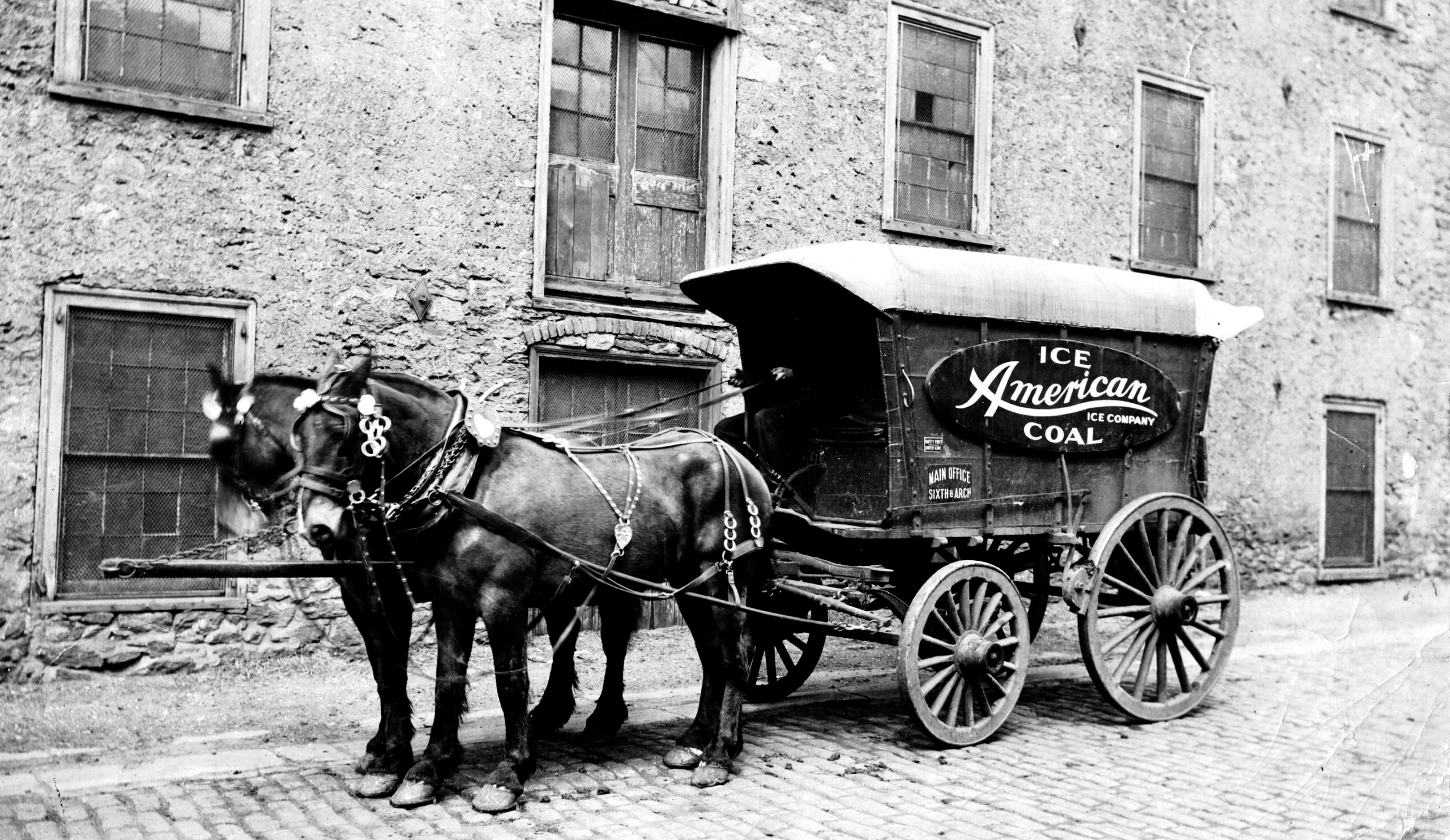
Did you know that United States Cold Storage can trace its own history back 127 years to 1899? It’s also an engaging, fascinating story of key moments and actions over more than a century. Coincidentally enough, it also involves the city of Philadelphia in the storyline.
Sharing thoughts about the company’s legacy are former executives past and present including David Harlan, Rod Noll, Mike Radnoti and Larry Alderfer.
MORE THAN A CENTURY OF SERVICE: US COLD THROUGH THE YEARS
1899 — United States Cold Storage traces its roots to the founding of the American Ice Company in New Jersey.
1900s — Natural ice harvesting is still the primary source of refrigeration and urban homes rely on daily ice delivery.
1905 — Mechanical refrigeration begins appearing in breweries and meatpacking plants and early “cold storage warehouses” emerge in major cities.
1910 — Artificial ice production starts to compete with natural ice, cold storage becomes critical for rail-based food distribution as refrigerated railcars expand national food supply chains.
1915 — Cities begin shifting from harvested ice to manufactured ice plants as cold storage enables longer shelf life for meat and dairy, ice delivery still common but beginning to decline.
1925 — Commercial refrigeration systems improve efficiency and scale and grocery stores begin using refrigerated display cases – ice harvesting rapidly declining in major cities.
 Harlan, US Cold’s former President & CEO, retired at the end of 2019 after 40 years with the company.
“I think the pivotal moment was when Swire purchased American Consumer Industries, which included US Cold,” he says. “Swire then sold off the many diversified operations—including an ice business—to concentrate on cold storage.
“Then the one person who most impacted the company most was its first CEO Peter Roberts,” says Harlan. “He realized US Cold needed revitalization and that old management wasn’t focused. Peter wanted to change company culture and, in part, make it fun.”
1935 — Refrigeration becomes standard in food production and storage as cold chain infrastructure begins forming across: production >> storage >> transport.
1940 — Majority of urban homes now have refrigerators, refrigerated trucking begins supplementing rail, frozen food category begins to emerge.
1945 — Cold storage becomes essential for national food security, frozen foods expand rapidly in retail.
As an example, he purchased a racquetball club membership and invited everyone at the Philadelphia office to play during lunch. It was a great way to build camaraderie with so many of us who were young professionals. He had a similar effect in the field and looked for key players who could embrace vision. He identified Pat Fitzpatrick and that later led to my decision to promote Pat to Chief Operating Officer.
Harlan concludes, “Peter was only there for about a five-year tenure but he had a dramatic effect. Ultimately, he would lay the foundation for our management team for what would be the next 30 years.”
1899
1899
United States Cold Storage traces its roots to the founding of the American Ice Company in New Jersey
1900
1099
Natural ice harvesting is still the primary source of refrigeration and urban homes rely on daily ice delivery
1905
1905
Mechanical refrigeration begins appearing in breweries and meatpacking plants and early “cold storage warehouses” emerge in major cities
1910
1910
Artificial ice production starts to compete with natural ice, cold storage becomes critical for rail- based food distribution as refrigerated railcars expand national food supply chains
1925
1925
Commercial refrigeration systems improve efficiency and scale and grocery stores begin using refrigerated display cases – ice harvesting rapidly declining in major cities
1935
1935
Refrigeration becomes standard in food production and storage as cold chain infrastructure begins forming across: production >> storage >> transport
1950
1950
Refrigerator becomes a standard household appliance, modern cold chain logistics model is fully established, natural ice harvesting is effectively obsolete
1961
1961
American Ice Company changes its name to American Consumer Industries. Frozen food sales exceed $1 billion annually in the U.S. Cold storage warehouses are now essential infrastructure.
Partners – In Progress
USCS hosts 11th annual Carrier Conference, honors transportation partners.
Let’s face it: digital technologies make it much easier to communicate quickly and efficiently.
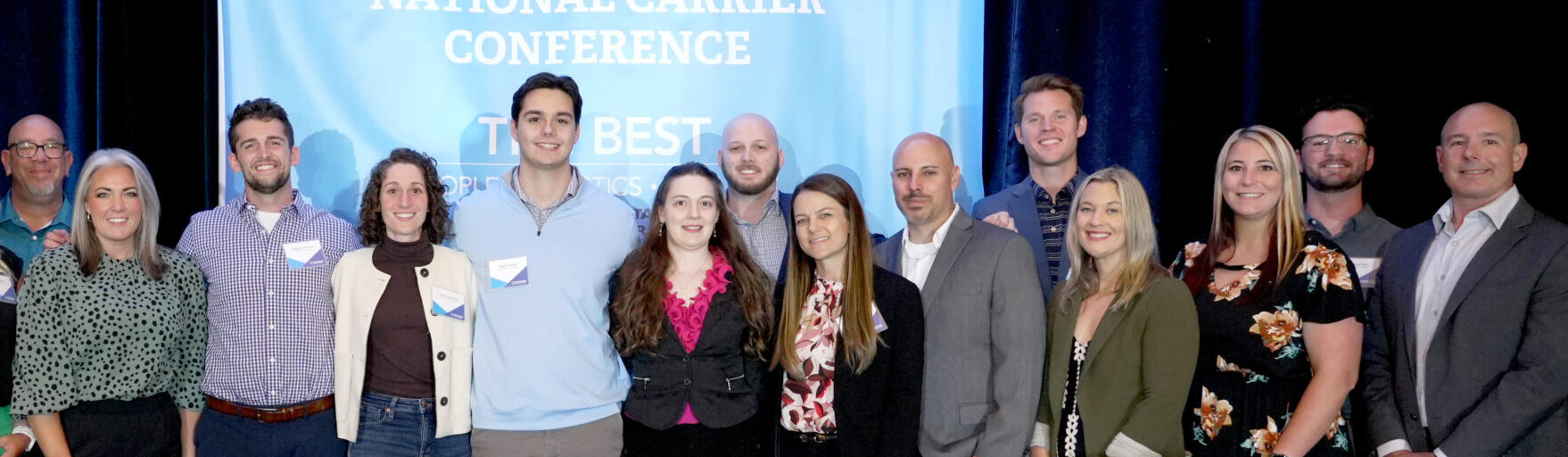
Then again, there are times when technology can’t replace the impact of face-to-face connections. And when it’s important to invest in relationships with industry partners, it’s critical to put together an event—rather than an email. That’s just what USCS did this fall when it hosted its 11th annual Carrier Conference.
The one-day meeting in Naperville, IL, brought in 150 people—including 140 carrier executives from as many as 95 different companies.
USCS dedicated the meeting to industry information, an industry “invitation” and a celebration to honor top performing partners.
“This is one of our most important events of the year,” says Mike Carlisle, Senior Director of Logistics. “It gives all USCS transportation members an opportunity to engage with our carrier base. We want to know what we are doing well—and just as importantly—where we can improve.”
Industry Information
To open the meeting, Carlisle shared information about USCS’s recent growth and a peek ahead to the company’s many 2026 initiatives.
USCS knows carrier partners are interested to learn about broader transportation market trends. For that reason, it sponsored a 2025- 26 Transportation Market Update from RXO executives Corey Klujza, Vice President, Pricing and Procurement Strategy; and Kevin Adamik, Director, Procurement Analytics.
Another meeting highlight was a six-person, live panel (also recorded as a “Cold Cast” video/podcast). The hour-long panel explored innovations, challenges, and partnerships impacting refrigerated transportation. USCS Moderators included Mike Carlisle and Anna Johnson, Vice President of Marketing & Commercial strategy.
USCS panelists included:
Marc Vendome, General Manager, Logistics East
Alec Dominguez, General Manager, Logistics West
Wendy Snoke, Senior Director Logistics
Industry participants included:
Bryan Arterberry, Operations Manager, Arterberry Transportation
Jordan Mickiewicz, Senior Manager Sales, RXO
Chris Stuehm, Manager Planning Department, Gulick Transportation
“This was a second time to host a Cold Cast panel and this year’s focus was ‘How to be a Successful Carrier for USCS,’” said Carlisle. “No matter the volume or the spend, we want all of our carrier partners to succeed. In the end, it was a success and we took a range of audience questions—from product claims to drop trailer programs.”
Industry Invitation
USCS also invited carrier partners to grow with it and Vendome discussed how USCS would like to engage its carrier partners. He shared carrier scorecard expectations and discussed how USCS uses FourKites software to provide real-time transportation data. He noted that USCS already uses FourKites to track up to 90% of all its loads.
Sustainability also is a critical factor and USCS continues to encourage carrier partners to enroll in the Environmental Protection Agency’s SmartWay program. SmartWay carriers submit efficiency and air quality performance data to EPA annually.
Ultimately, when USCS utilizes a SmartWay carrier on a load it can apply a more accurate emissions factor to that load when it calculates emissions.
“Approximately 55% of our carrier partners already are enrolled in this program,” notes Carlisle. “Our goal is to reach 75% of all loads moved by Smartway certified carriers by 2030 so we’re encouraging all carriers to sign up.”
And the Award Goes To…
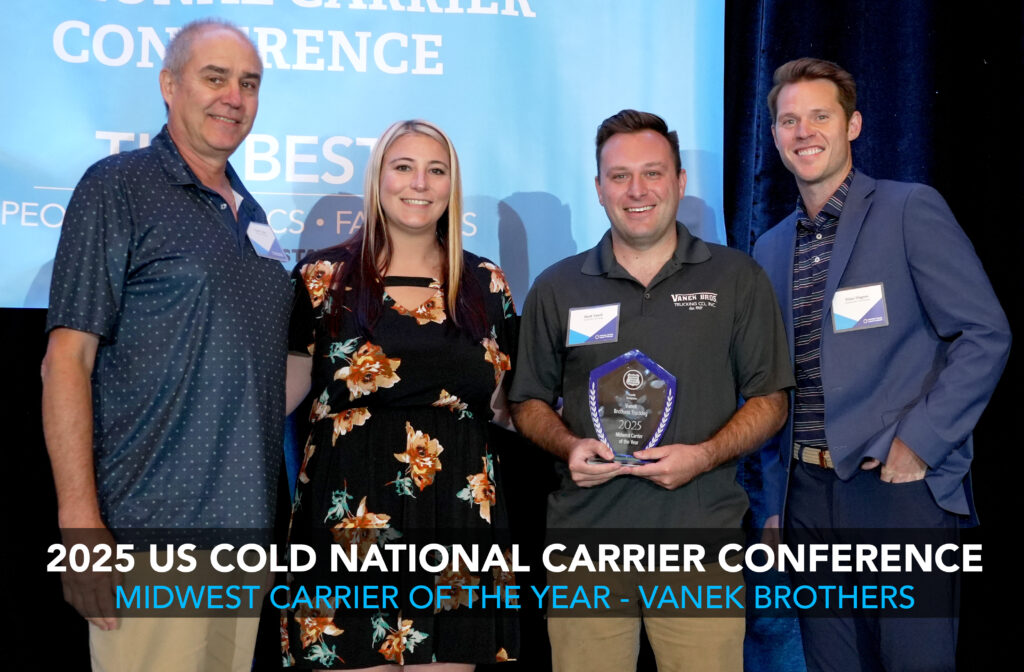
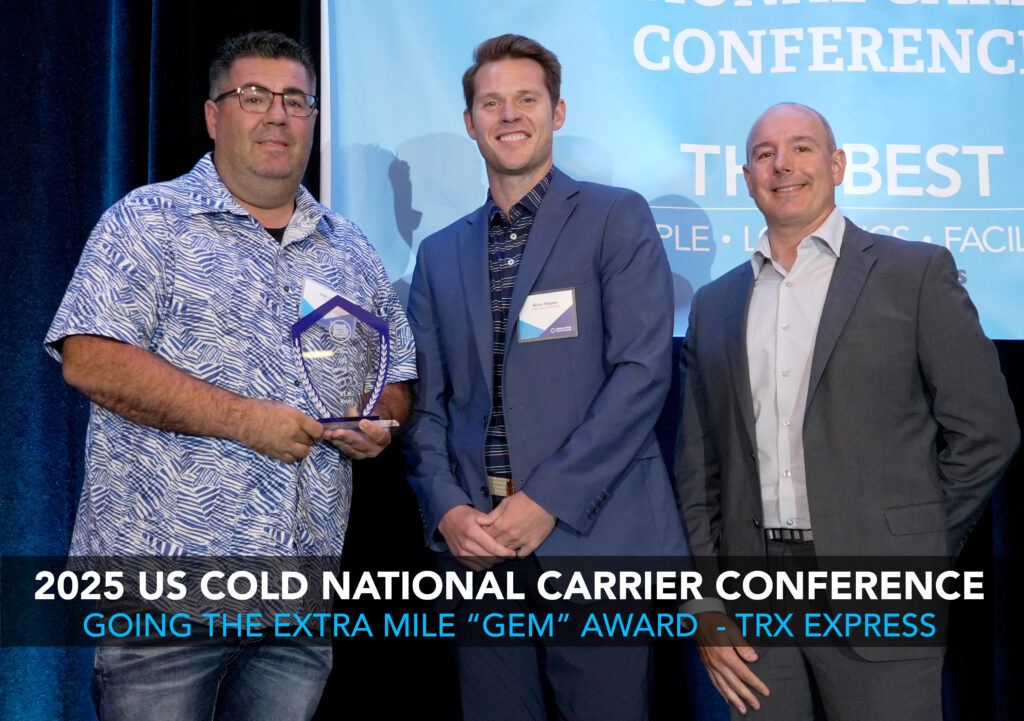
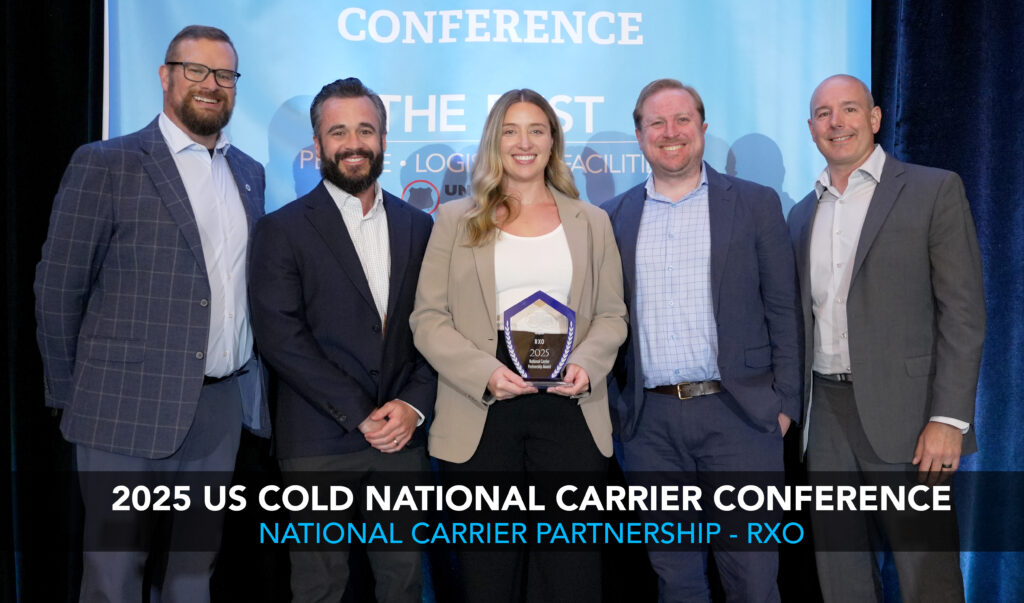
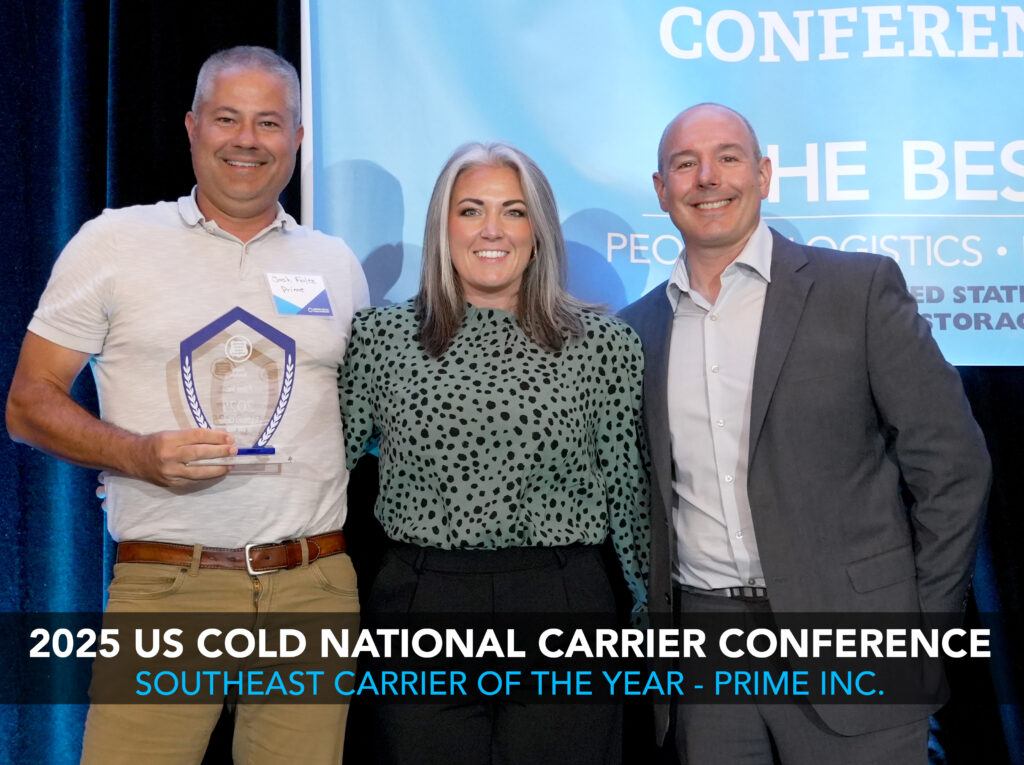
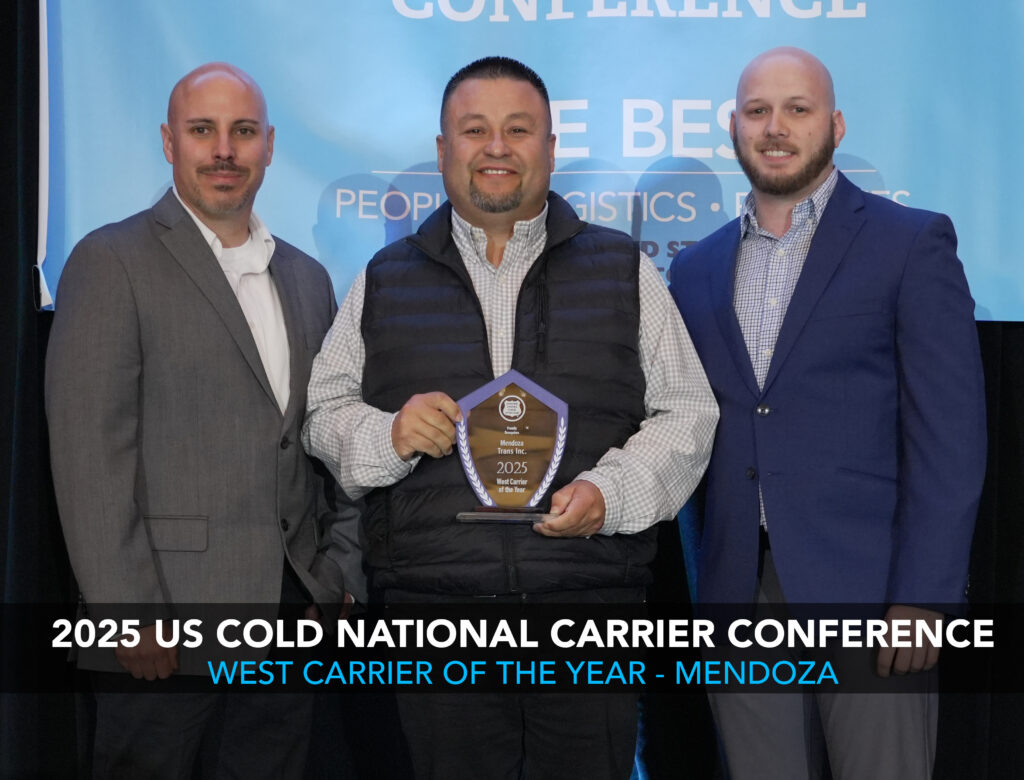
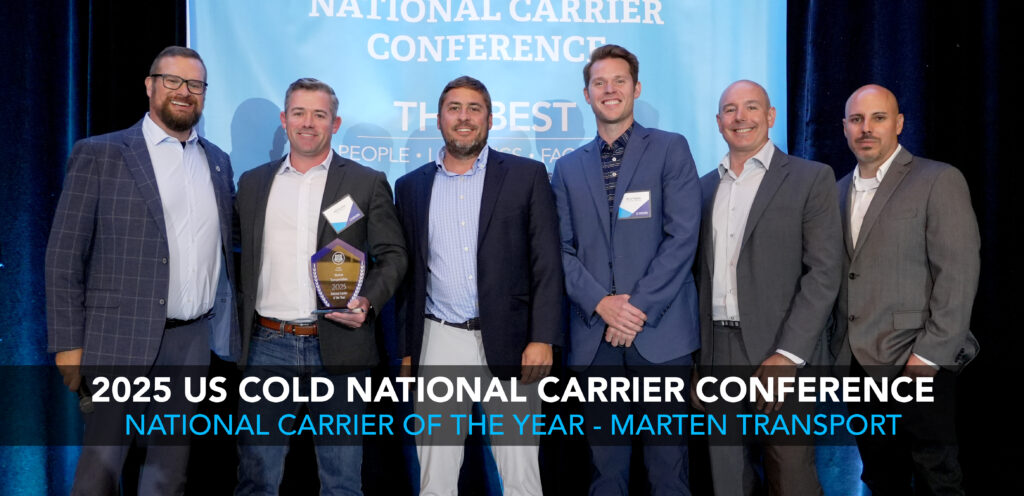
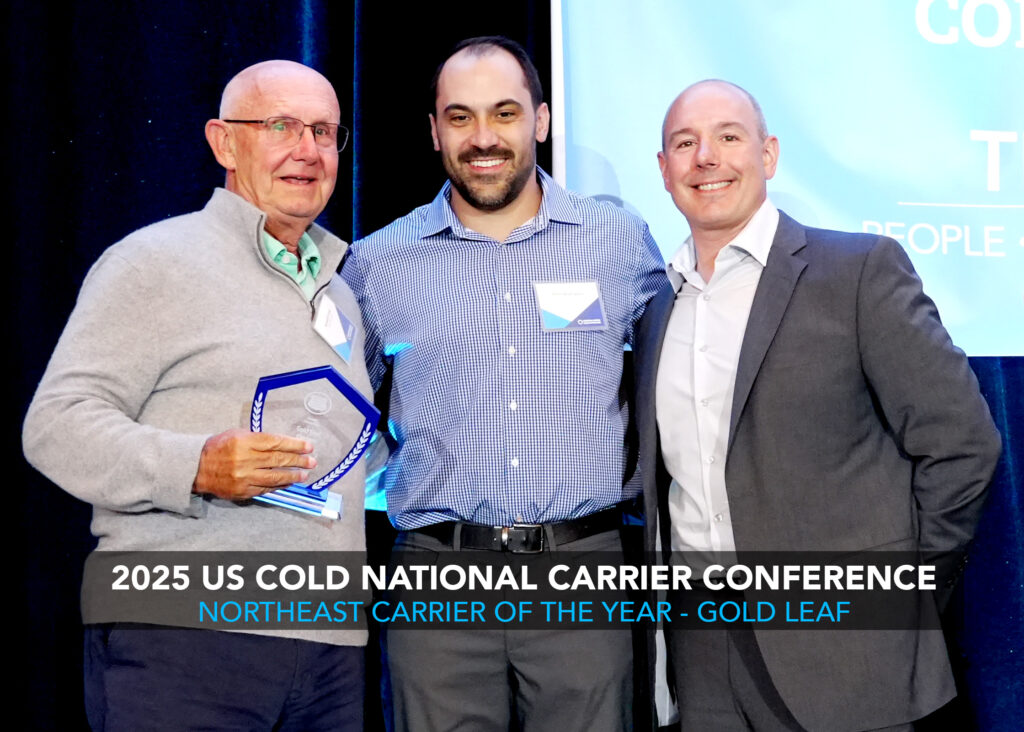
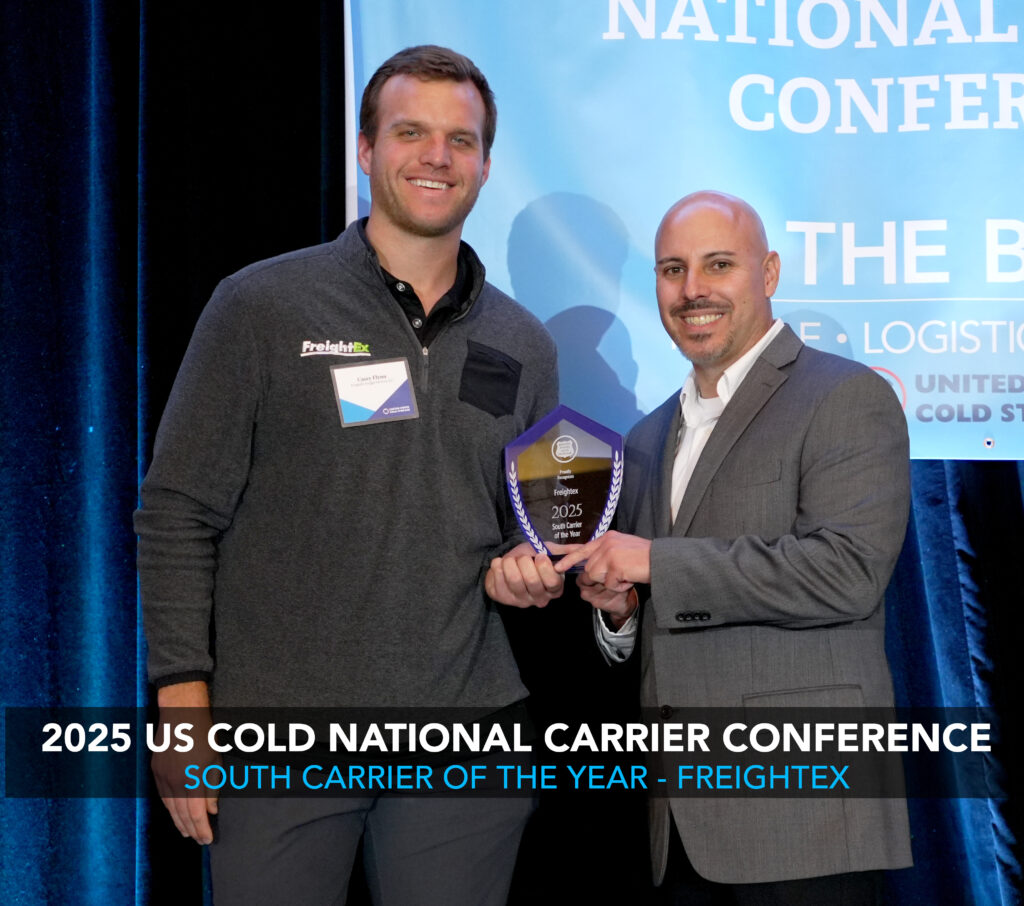
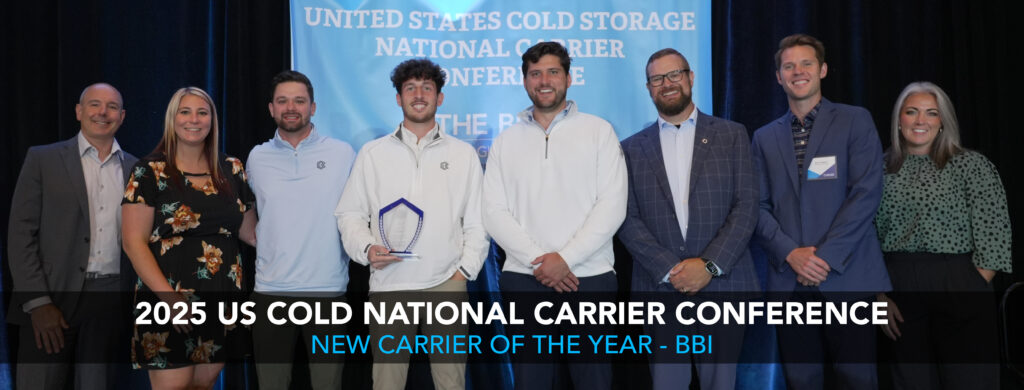
USCS uses its Annual Carrier Conference to recognize its top performing carrier partners. Carriers are evaluated across as several key performance indicators, such as On Time to Pickup, On Time to Delivery and FourKites compliance.
“These carriers continually display excellent service to USCS and to our customers,” notes Mike Carlisle, Senior Director, Logistics Operations. “They are all truly partners and make USCS successful.”
Here’s a look at USCS’s 2024-2025 award winners:
Because Information is Everything
US Cold’s new PaSS is a pioneering process to convert inventory storage data.
It’s not unusual when US Cold makes headlines as it builds or expands cold storage facilities.
 But did you know the company also is on the cutting edge of storage in other areas? Company information technology experts have pioneered a quicker, effective process to transfer the storage of data, which of course, is US Cold’s other most critical asset.
From coast to coast, US Cold sites have been converting from legacy warehouse management systems to US Cold’s new proprietary Phenix platform. Senior Software Implementation Manager Justin Michael describes the past data transfer as a “big bang approach.” It would take as many as 30 hours of hands-on activity to move a particular site’s data from legacy to Phenix with structured query language (SQL) insert scripts.
Michael notes that such a laborious process—inserting more than four million records at US Cold’s medium-sized facilities directly into the new database—did not always ensure data quality and accuracy. And when data discrepancies popped up, they soon required much more painstaking back work to resolve issues.
There had to be better way. Michael says one conversation led to a breakthrough shift. “The risks around data integrity and the workload on our development teams post migration were high,” he says. “A conversation between US Cold Vice President of Technology Bobby Kareer and Jeff Funk, General Manager, Quakertown East, PA, sparked our desire for an alternative approach where the sites could have more active participation in the conversion process.”
It was in fall 2024 that US Cold first tested a new Phenix as Self Service (PaSS) approach whereby it brings over the active inventory records using robotic process automation (RPA). Michael says this method uses front- end validation and simulates a user creating receipts, appointments, and radio frequency receiving.
“We are leveraging RPA flows using power automate to migrate data between systems. This is a first for any company in our industry,” notes Michael.
“Ultimately, the seamless transition between systems strengthens our relationship with our customers and an increased confidence in our IT deliverables.”
 Site-Specific Local Learning
Michael says PaSS allows sites to learn Phenix system functions in the context of customer expectations. As they configure the system for the customer requirements, they also can troubleshoot and analyze efficiency without customer disruption.
Ultimately, testing is paced so that it builds system familiarity through repetition and the overall system is multi-user friendly. “PaSS now allows the operational knowledge at the site to transfer to Phenix,” says Randy Tonge, a Phenix Implementation Supervisor who has been with the implementation group since 2019. “Users can continue to focus on the customer experience with minimal downtime for troubleshooting and learning the new system processes on the fly.”
US Cold began exploring the PaSS process in fall 2024 and Michael says it completed its first successful customer migration in April 2025 with Inventory Data Load (IDL) in production.
Contributing to the multi-faceted project were representatives of US Cold’s Development (Legacy, Phenix, RPA), Implementation, Product, Automation, and Quality Assurance groups.
Already in Use, From Texas to Tennessee (and Beyond)
Michael says that as many as 13 out of 21 remaining warehouses on US Cold’s Legacy system have begun their PaSS journeys. USCS Dallas converted its first account to Phenix in 2022 with a traditional data migration model. After utilizing PaSS, he says Dallas has converted more than 30 customers just since June 2025. Elsewhere, a continuous improvement team spurred USCS La Vergne, TN, to start its PaSS journey in spring 2025.
With more direct project management and a dedicated implementation team La Vergne since has converted 20 customers to Phenix. “The current wave of PaSS warehouses all have volunteered to participate in this new strategy,” says Michael. “We are working with 13 warehouses overall and eight of them have actively converted accounts to Phenix (Dallas, Fort Worth and Denton, TX; Tracy, CA; La Vergne, TN; Bethlehem, PA; Lebanon and Hebron, IN).
“I’ll credit the management groups at La Vergne and Dallas, which had aggressive goals for 2025 to convert all accounts from Legacy to Phenix,” he adds. “Dallas is on track to complete that goal in mid-December and La Vergne should be fully converted in the first quarter of 2026.”
And how are US Cold’s processor-shipper customers experiencing the program?
“There are fewer system issues for customers converting with the PaSS program,” says Michael. “Service levels at the sites are less likely to decline or suffer failures due to system issues. This results in on-time schedules and we maintain high levels of inventory accuracy.
“Many of our customers that have already been migrated had forgotten that a conversion had even taken place,” adds Dan Regnart, General Manager, USCS Dallas.
Looking Ahead
Michael and others already have goals in mind for 2026.
“We have a very aggressive goal to fully convert seven more warehouses via PaSS next year,” he says. “For this to be realistic, we will need warehouses to dedicate time and resources as they validate and configure accounts in Phenix. In addition, our development team will need to deliver on our CSC integration, Labor Management System (MARC) integration and automation solutions.”
Michael closes with a nod to his many US Cold colleagues.
“I want to give a special shout-out to our implementation team, IDL development group, EDI team, support team and our sites for their efforts to make this initial year with PaSS a successful one. I have high expectations that together we can achieve great things in 2026 and beyond.”
Summit Experience
USCS Engineering Summit embraces teamwork, new technologies and more.
Perhaps it goes without saying but often the best “outside-the-box” thinking requires a change of scenery. And when your company has a coast-to-coast presence, true team building means literally gathering those team members together.
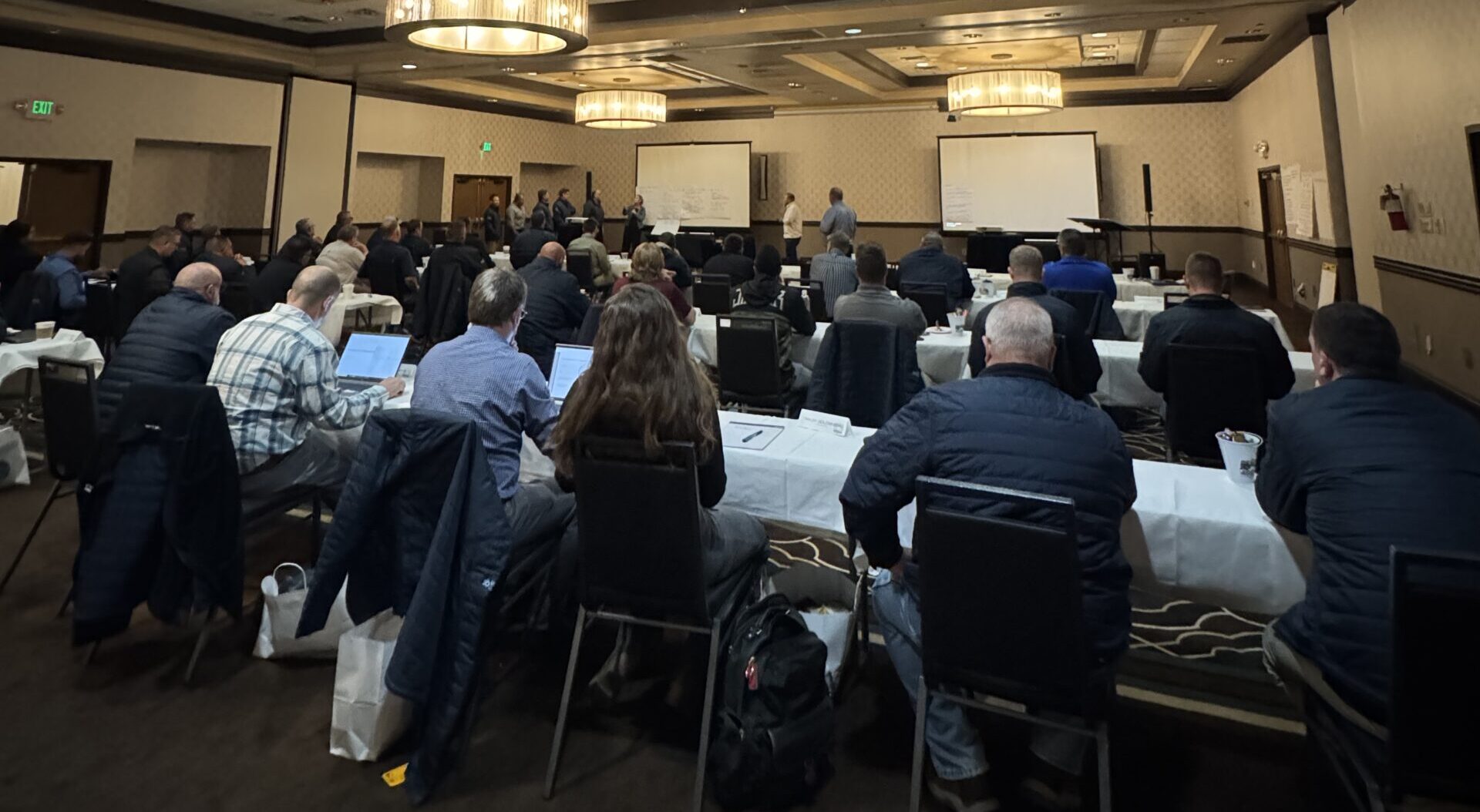
That’s just what happened as USCS hosted its fourth annual Engineering Summit, a four- day event, Sept. 29-Oct. 2, in Lake Tahoe, NV. Undoubtedly a high point for USCS’s engineering group, it literally was a summit at high altitude nestled in the Sierra Nevada mountains between California and Nevada.
 “We host our Engineering Summit to share best practices and ensure our engineering teams are up to speed on the latest technologies,” says Mike Lynch, Senior Vice President of Engineering. “We also want to provide a forum for discussion, camaraderie, and team building.”
The 2025 event drew 69 attendees including 63 USCS employees and six vendor representatives. USCS participants included chief engineers, project engineers, regional and area engineers.
Also attending were USCS executives and managers leading automation, process safety, compliance, sustainability, maintenance and reliability.
USCS functional leaders led presentations on Lock Out/Tag Out safety matters, procurement, maintenance, sustainability and Very Narrow Aisle (VNA) automation technologies. Additional guest speakers shared in-depth views about refrigeration controls and valves (Hansen Technologies), new quick-freezing technology (Tippmann Engineering) and forklifts and material handling equipment (Crown Equipment Corp. and MHS Lift).
The summit closed Thursday morning with “best practices” presentations from each of USCS’s four regional engineering groups. Each team presented examples of cost saving initiatives as well as innovation project ideas.
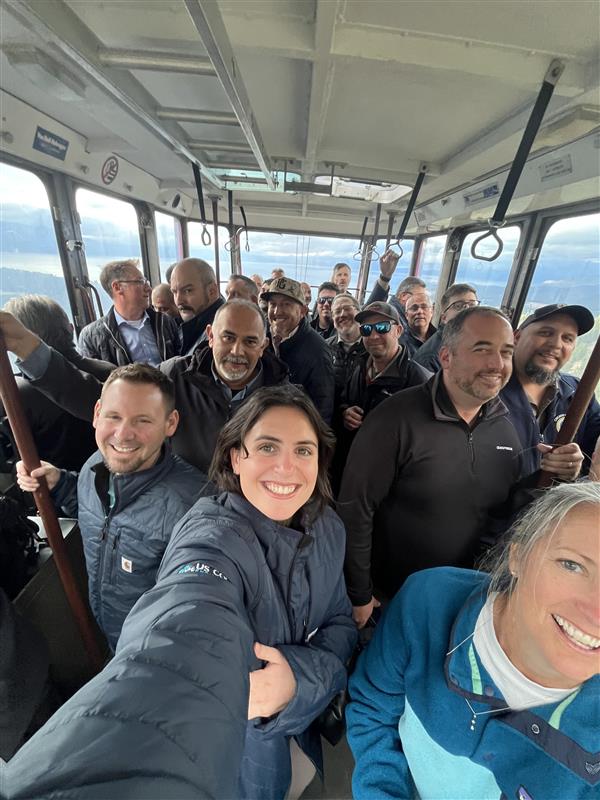
Of course there’s learning—but how about laughing as well? The agenda also incorporated numerous team-building activities for camaraderie. They included dinners as well as an exclusive, Wednesday afternoon boat cruise on Lake Tahoe. Lynch thanked three executives for preparing the event: Elena Castellanos, Regional Safety Manager-West; Jim Duffy, Senior Manager, Engineering, Transformation and Development; and Eric Andrade, Regional Engineer-West.
“Each year our Summit is better and better and I thank Elena Castellanos, Jim Duffy and Eric Andrade,” says Lynch. “Their involvement brought additional insight and focus to the Summit planning and execution. The location was perfect. It added the majestic, natural aspects of Lake Tahoe with an insightful and fun agenda.”
Texas Two-Step
USCS Laredo, TX, eyes step-change improvement with new distribution services.
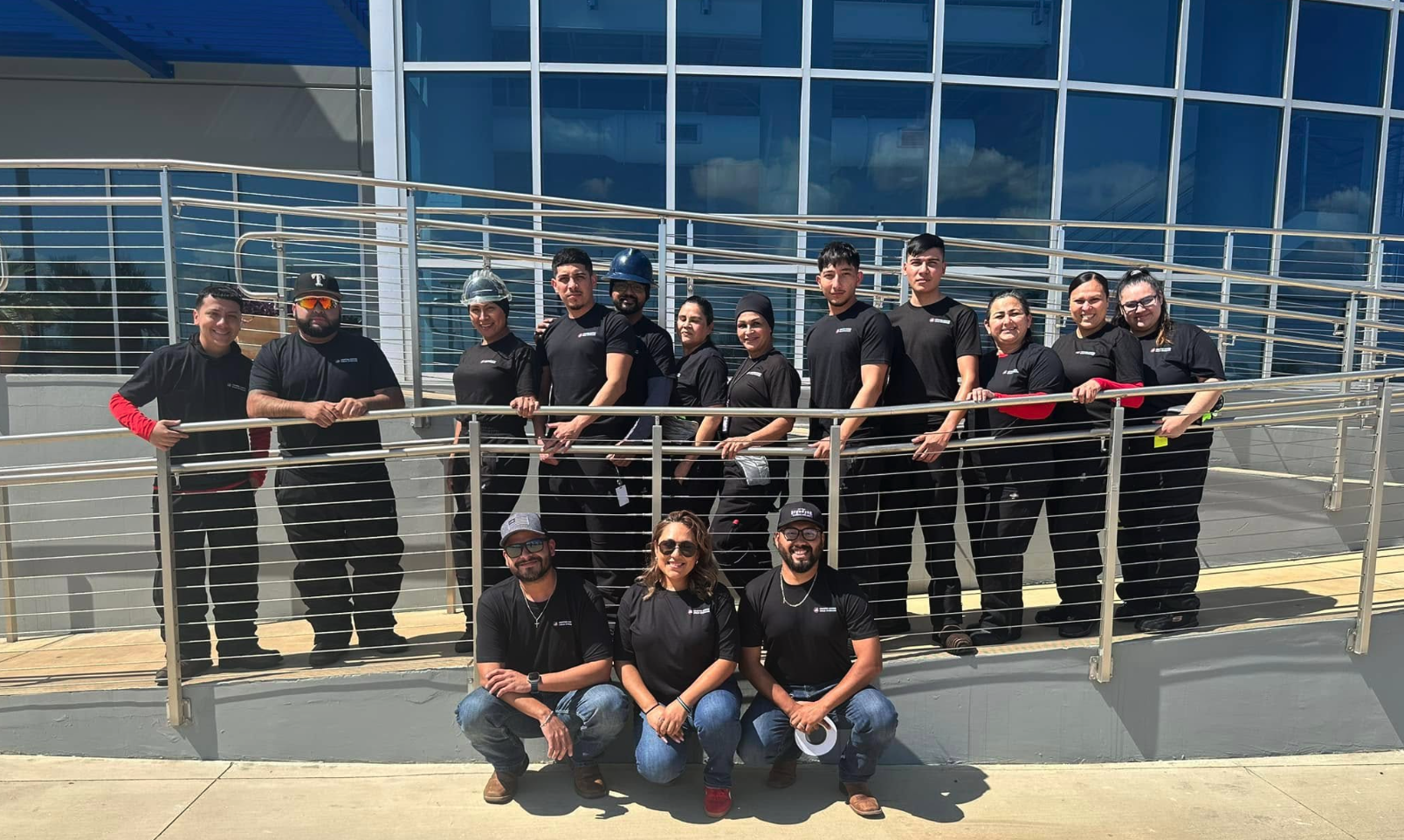
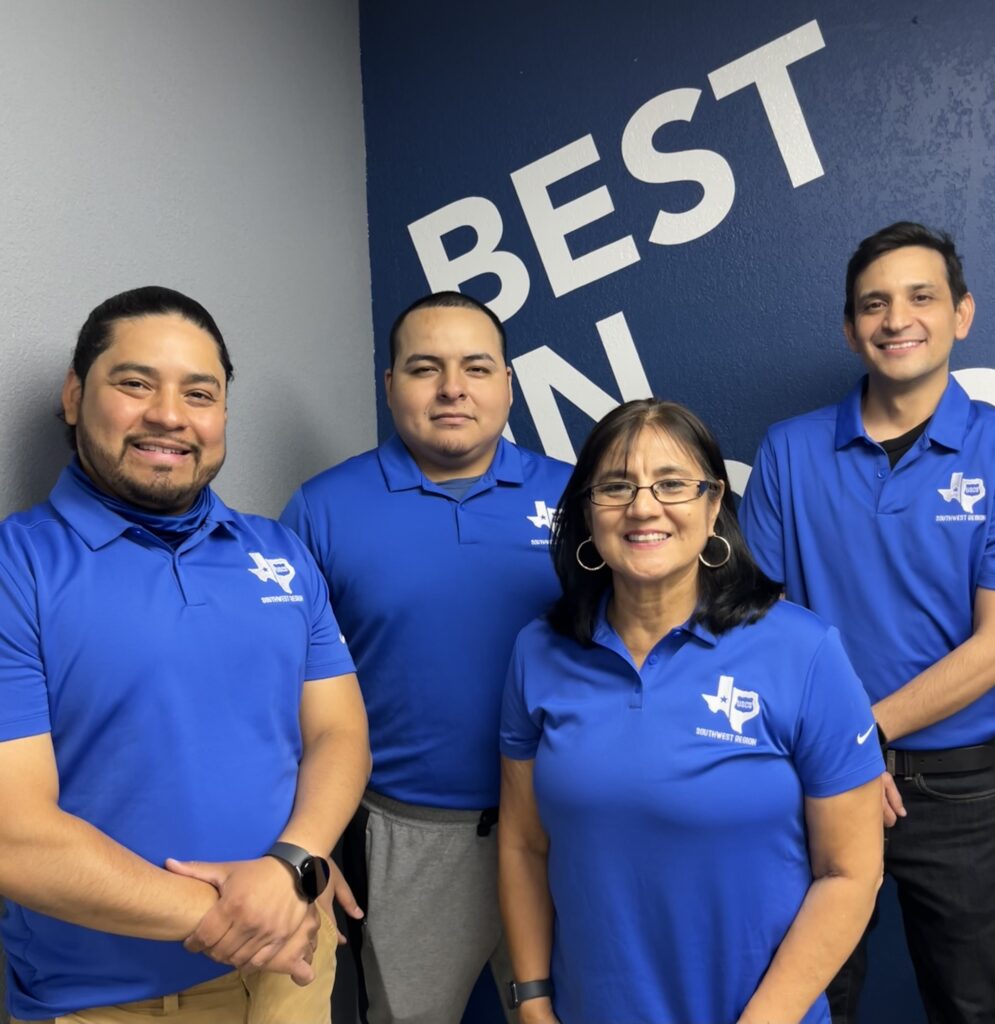
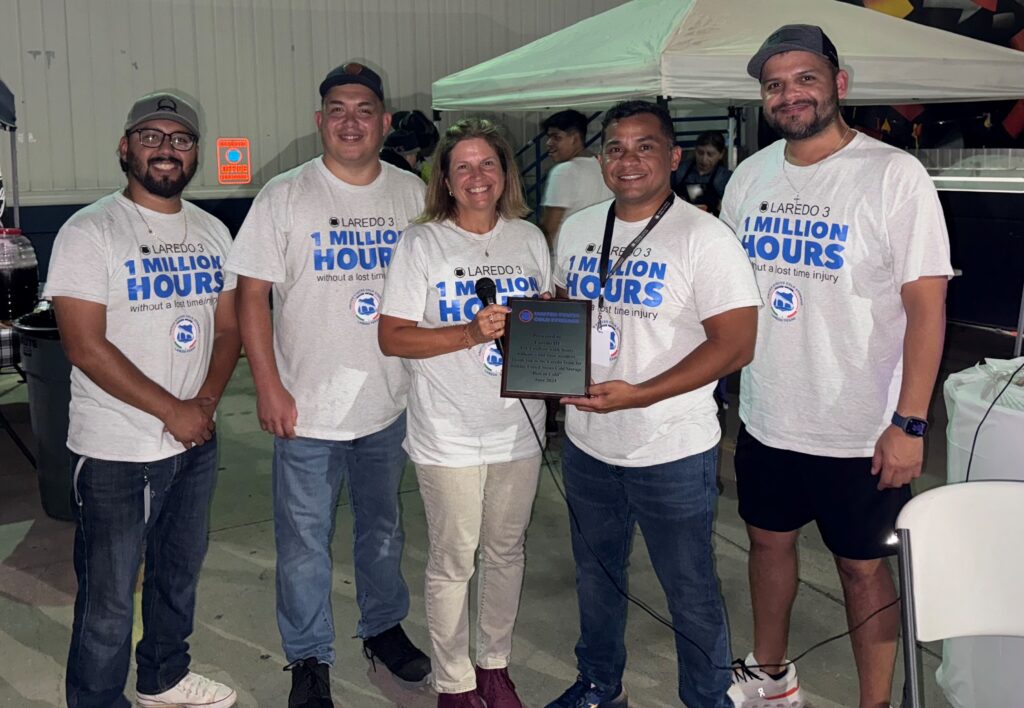
They say when the going gets tough—the tough get growing. Pardon the play on words but that’s just what’s happening at USCS Laredo, TX.
Some reports rank Laredo as the nation’s leading port for total trade volume and say it handled more than $339 billion in trade in 2024. It is the nation’s leading gateway for goods entering the U.S., particularly from Mexico. Every day, USCS’s three Laredo facilities collectively handle between 150 to 200 trade-related appointments.
 “Our USCS Laredo sites provide our current and potential customers an advantage not offered by competitors,” says Carlos Stern, USCS Regional Vice President-Southwest. “We provide attention to detail for their product that is synonymous with the ‘Best in Cold’ service United States Cold Storage is known for. Our Laredo facilities give customers the ability to have their partners and suppliers across the border bring in raw materials/finished goods to a provider they know and can depend on. All with the peace of mind that our standards are as stringent as their own.”
He adds, “On the other side of the coin, we offer a strategic location that lends itself to helping customers ship their products into Mexico and further South to serve the Latin American Market with forward-deployed inventory at a location that provides all the services needed to export goods under one roof. With the frozen and refrigerated food demand growing in this part of the world we want to make sure our partnership with our customers is one that allows them the ability to grow their market share in this region.”
As more freight forwarders and customs brokers also add USDA import-export handling, it’s become time for USCS Laredo to grow in new directions. Providing that context for change is Gerardo Palencia,
General Manager for two of three USCS Laredo sites.
“We have close to 40 years of experience servicing the area, with a team that has the knowledge base of what is required to facilitate import-export activity,” he says.
“We are in tune with what the market needs for successful international trade and we provide high-quality service levels that USCS customers are accustomed to at any of our other sites across the nation.”
For the record, USCS Laredo operations already offer complete logistics planning as well as brokerage and custom analytics services.
So how can USCS Laredo distinguish itself from area competition?
“In 2026, we expect to add transportation services out of Laredo—specifically into major retailer distribution sites,” says Palencia.
“This will help us make strategic shift from how we’ve historically handled business in Laredo and at the border. It will allow us to minimize exposure to threats that impact volumes on international trade. Our plan is to create strategic partnerships and solutions for U.S. retailers through consolidation of their inventory from multiple international vendors at our facilities.”
Stern adds, “Many Laredo customers may not know their shared suppliers or fellow processor-shippers also store with USCS in other sites in the network. That opens up possible cost-saving solutions through our Transportation Services. We could handle their transportation services to reach a shared customer, or we could even use or USCS Logistics Group to arrange raw materials transportation to their production sites.”
Get a Quote for Laredo



 In our Q3 Issue, we present: